1. The Monitoring Gap Is Much Bigger than people think.
Global greenhouse gas emissions are monitored by way of a network of ground stations as well as occasional flight campaigns by aircraft and satellites that operate hundreds of kilometers from the earth's surface. Each has its own drawbacks. Ground stations are scattered and geographically oriented toward wealthy countries. Aircraft missions are costly but short-duration as well as limited in coverage. Satellites give global coverage but struggle to achieve the spatial resolution required to pinpoint specific emissions sources- such as a pipeline that is leaking, a landfill venting methane, an industrial facility which isn't reporting its output. This results in a monitoring system with serious shortcomings at the dimension where accountability and interventions are most important. Stratospheric platforms are increasingly examined as the gaping middle layer.
2. Altitude Creates a Monitoring Advantage Satellites Aren't Able to Replicate
There's a reason in geometry why 20 kilometres is superior to 500 kilometers for monitoring emissions. A sensor operating at a stratospheric elevation can see a ground footprint of several hundred kilometers whilst remaining close enough determine emission sources with sufficient level of resolution. These include individual facilities roads, roads, agricultural zones, and so on. Satellites that are looking at the same region from the low earth orbit can cover it better but with lower granularity and revisit times. A methane-rich plume that appears, then is dispersed in just a few hours will not be captured. A station that has its location within a desired area for a few days or even weeks at a time, transforms intermittent snapshots into continuous surveillance.
3. Methane is the most important target for a Reason
Carbon dioxide attracts most all the attention in the world, but methane is the greenhouse gas in which future monitoring improvements could make the biggest impact. Methane's toxicity is greater than CO2 when measured over a period of 20 years and a substantial proportion of methane emissions from humans originate from single sources- oil and gas infrastructure, waste facilities, agriculture operations -- which can be detected and, in most cases, fixable when they are discovered. Real-time monitoring of methane emissions from the stratospheric layer that is persistent means that regulators, operators and government officials can spot leaks as they occur rather than identifying these leaks months later with annual inventory reconciliations, which are often based on estimates rather that measurements.
4. Sceye's Airship's Design is Well for the Monitoring Mission
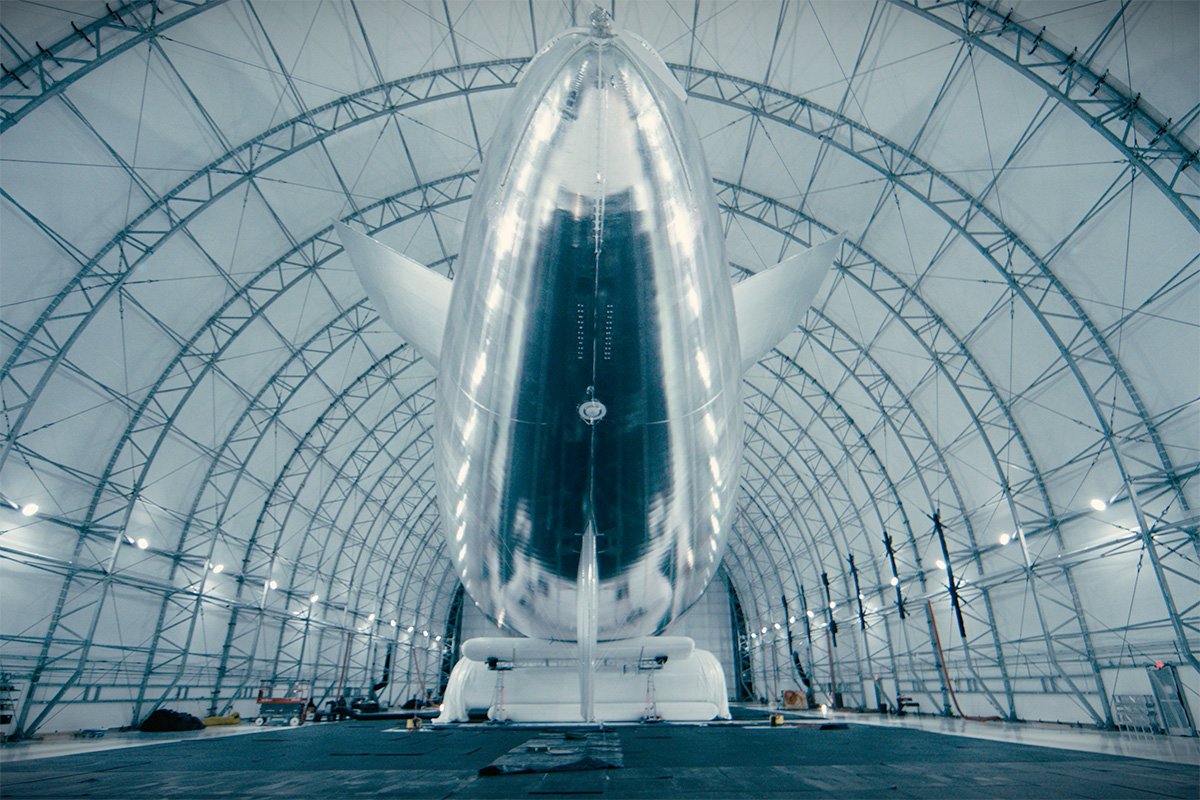
The qualities that make the best telecommunications platforms and a top environmental monitoring platform have more in common than you expect. Both require long endurance stabile positioning and meaningful payload capacity. Sceye's lighter airship strategy targets all three. Since buoyancy takes care of the basic purpose of staying above the ground its energy budget isn't depleted by the production of lift the budget is available for propulsion and station keeping as well as powering whatever sensor can be utilized to meet the requirements of the mission. For monitoring of greenhouse gases in particular this entails carrying cameras, spectrometers and data processing hardware without the heavy weight restrictions for fixed-wing HAPS models.
5. Station-Keeping Isn't Negotiable For useful environmental data
A platform for monitoring that is constantly drifting is a monitor that generates numbers that are difficult to interpret. Knowing exactly where a sensor was when it made a read is a crucial factor in attribution of that reading to a source. Sceye's commitment to true station-keeping -- ensuring at a constant position above the specific area by means of active propulsion -- isn't merely an important performance indicator for technical reasons. It's what makes data scientifically sound. Stratospheric earth observation is real-time useful for regulatory and legal purposes when the positional record is secure enough to stand to scrutiny. Drifting balloon platforms no matter how adept their sensors may be, they aren't able to provide that.
6. The same platform can also monitor Oil Pollution and Wildfire Risk at the Same Time
One of most appealing characteristics of the multipayload model is the way in which different environmental monitoring missions can complement one another on the very same car. A ship operating over coastal or offshore areas could carry sensors that have been calibrated for pollutant detection in conjunction with those that monitor CO2 or methane. Over land, the same platform architecture can be used to detect wildfires technology, allowing for the identification of smoke plumes, heat signatures, and vegetation stress indicators that precede ignition events. Sceye's approach to mission design does not consider these as distinct projects that require separate aircrafts, however as complementary use cases with infrastructure that's in place and operational.
7. Detecting Climate Disasters with real-time changes the Response Equation
There's an essential difference between knowing that a fire started after six hours and having the knowledge that it started only twenty minutes in the past. The same goes for industrial accidents that release hazardous gases, flooding that is that threaten infrastructure, or sudden methane release from permafrost. Monitoring climate disasters in real the time of a persistent stratospheric monitoring platform offers emergency managers governments, agencies, and industrial operators the opportunity to intervene which doesn't be present when monitoring relies on satellite revisit cycles or ground-based reports. The importance of this window grows as you think that the initial stages of the majority of environmental emergencies are an area where intervention is the most efficient.
8. Its Energy Architecture Makes Long Endurance Monitoring Possible
Environmental monitoring missions only offer their maximum value when the station is left on for longer enough to accumulate a meaningful data record. A week's worth of methane readings over an oil field tells you something. Months of continuous data tells that you have something to take action on. Being able to maintain that endurance will require solving the overnight energy problem -the platform has to have enough power stored during daylight hours to power each system through the dark without affecting positioning or sensor function. Innovations in lithium sulfur battery chemistry and energy density levels of 425 Wh/kg. In addition, increasing the efficiency of solar cells, create a closed power loop practicable. But without these two, endurance is simply an aspiration, rather than the definition.
9. Mikkel Vestergaard's Biographical Background Explains The Environment-related Focus
It's important to know why a stratospheric aerospace company places such apparent emphasis on greenhouse-gas monitoring and disaster prevention rather than leading purely with the revenue generated by connectivity. Mikkel Vestergaard's history in using technology to tackle large-scale humanitarian and environmental problems gives Sceye its ethos that influences the tasks that Sceye prioritizes and how it explains its platform's mission. The environmental monitoring capabilities aren't a side-payload added onto the appearance of a telecoms device more socially responsible. They are a true belief that stratospheric infrastructure should be taking on climate issues, and this platform is able to do both without compromising either.
10. The Data Pipeline Is as Important as the Sensor
Collecting greenhouse gas readings from the stratosphere is not all the matter. getting that information to people who need it, in a way they can be able to act upon, in close to real time is the second part. A stratospheric based platform with integrated processing capabilities, as well as a direct link to ground stations is able to reduce the time between detection and conclusion significantly than systems that batch data for later analysis. For natural resource management applications such as regulatory compliance monitoring or emergency response, the timing of data is usually as much as its precision. Incorporating that data pipeline into your platform's framework from the beginning, rather than considering it as an afterthought is one of the things that sets stratospheric geoobservation as a serious science from non-deliberate sensor campaigns. Have a look at the top rated what are high-altitude platform stations for website examples including what are haps, marawid, sceye haps payload capacity, Real-time methane monitoring, Direct-to-cell, sceye haps airship status 2025 2026, Sceye News, SoftBank investments, stratospheric internet rollout begins offering coverage to remote regions, sceye haps softbank partnership and more.

How Stratospheric Platforms Are Reshaping Earth Observation
1. Earth Observation Constricted by the Observer's position
Each advancement in humankind's ability in observing the planet's surface has come from the search for higher-quality vantage points. Ground stations offered local precision but not reach. Aircraft added range, but used up energy and needed crews. Satellites covered the globe however they also introduced distance that weighed resolution and revisit frequency with respect to the scale. Every step up in altitude resulted in solving some issues and introducing others, and the trade-offs that are inherent in each of these approaches have affected what we know about the planet we live on and, most important, what we can't see enough clearly to do anything about. Stratospheric platforms offer avantage where a point is placed between aircraft and satellites in ways that can resolve many of the most persistent choices, instead of simply shifting them.
2. Persistence refers to the capacity of observation Which Changes Everything
The most revolutionary thing an instrument that provides stratospheric observations isn't resolution not areas of coverage, or sensor sophistication -- it is persistence. The ability to watch the same place over a long period of time, for weeks or even days at a time, without gaps in the data record, transforms the types of questions the earth observatory can answer. Satellites answer questions about state: what does this location appear like at the moment? In the case of persistent stratospheric platforms, they answer questions about process -- how is the situation evolving and how quickly, driven by what factors and when does intervention become required? Monitoring greenhouse gas emissions, fire development, flood progression and the spread of pollution to coastal areas processes are the ones that affect decision-making They require constant observation that only constant observation can provide.
3. It is believed that the Altitude Sweet Spot Produces Resolution that satellites can't match at Scale
Physics determines the relationship that exists between altitude, sensor aperture, and resolution of the ground. A sensor operating at 20 km is able to attain ground resolution levels that require an incredibly large aperture to replicate from a low Earth orbit. This means a stratospheric earth observation system can discern individual infrastructure components like pipes, tanks for storage, maritime vessels, agricultural landthey appear as sub-pixel blur in satellite images at comparable sensor cost. It is useful for monitoring oil pollution spread from an offshore location and determining the precise location of methane leaks along one of the pipeline corridors or tracking the leading edge of a forest fire over an extensive terrain, this benefit directly affects the specificity of the data available to the operators and decision-makers.
4. Real-Time Methane Monitoring Can Be Operationally Useful from the Stratosphere
Methane monitoring by satellites has improved substantially in recent years, but the combination of the frequency of revisit and the resolution limitations means satellite-based methane detection tends to locate large, ongoing emission sources and not just episodic releases from isolated point sources. A stratospheric system that provides live methane surveillance over an oil and gas-producing zone, a large region of agricultural land, or a waste management corridor can alter the dynamic. Continuous observation at stratospheric resolution will identify emission events in the moment they occur, attributing them to specific sources, with a precision that satellite data is unable to deliver, and give the type of time-stamped, specific evidence of the source that regulatory enforcement and voluntary emissions reduction programs both require to function effectively.
5. Sceye's approach integrates observation with the Architecture of Missions Broader
What distinguishes Sceye's way of doing stratospheric geospheric earth observation versus considering it a separate sensors deployment, is its incorporation ability to observe into a broader multi-mission platform. The same car that has greenhouse gas sensors can also carry connectivity equipment for disaster detection systems and possibly other environmental surveillance payloads. This integration isn't just a cost-sharing scheme, but shows a consistent view that the data streams from various sensors will be more valuable when they are by combining them than if used alone. An connectivity system that also observes is more valuable for operators. A platform for observation that allows emergency communications is much more useful to governments. The multi-mission structure increases the effectiveness of a single stratospheric operation in ways separate, one-purpose vehicles can't replicate.
6. Oil Pollution Monitoring illustrates the Operational Value of Close Proximity
Monitoring oil spills in offshore and coastal environments is a domain where stratospheric measurements offer significant advantages over satellite and aircraft approaches. Satellites can identify large slicks but struggle with how much resolution is required to see spreading patterns, shoreline contacts and the behaviour of smaller releases prior to larger ones. Aircrafts can reach the required resolution, but they are unable to maintain continuous coverage over large areas, without expensive operational expenses. A stratospheric platform holding position in a coastal zone can track pollution events from initial recognition through spreading by shoreline impacts, ultimately dispersal. the continuous spatial and temporal data that both emergency intervention and legal accountability require. The ability to monitor oil pollution over a longer observation window without gaps unattainable from any other platform type at the same price.
7. Wildfire Viewing from the Stratosphere Captures What Ground Teams can't See
The view that stratospheric altitude gives of a burning wildfire differs qualitatively from any you can get at ground level, or from low-flying aircraft. Fire behaviour in complex terrain and spotting before the fire's front line, observing crown fire development, the interaction of the fire with pattern of winds and fuel water gradients- is apparent in its full spatial context when it is observed from a high enough altitude. A stratospheric observatory of an active fire provides commanders with a continuous, large-area view of fire behavior which can allow them to make deployment decisions in accordance with what the fire is actually doing and not what the ground crews in certain locations are experiencing. Notifying climate disasters in live time from this location does more than just enhance responseit improves the effectiveness of command decisions during an event's duration.
8. The Data Continuity Advantage Compounds Over Time
Each observation event has value. Continuous observation records have compounding value, which increases in non-linear fashion with the length of time. A week's worth of stratospheric observation data for an agricultural region establishes a baseline. A month's worth of data reveals seasonal patterns. The year encompasses the entire year's cycle of development in terms of water use, soil condition, and production variation. Multi-year records become the foundation to understand how the region is changing as a result of climate change, land management practices, and trends in water availability. In the case of natural resource management which include agriculture, forestry as well as water catchment and coastal zone management, and more -an accumulation of observation data will often be more valuable than any one observation event, regardless of the resolution or timely its distribution.
9. The Technology that allows for long Observation Missions is Rapidly Developing
Stratospheric geo-observation is only as effective as the platform's capacity to stay in place for enough time to create valuable data records. The energy systems which control endurance - solar cell efficiency on stratospheric aircrafts, lithium-sulfur's battery energy density approaching 425 Wh/kg as well as the power loop that sustains all systems through the diurnal cycles are developing at a rate that is beginning to make multi-week, lengthy stratospheric trips operationally viable instead of aspirationally planned. Sceye's work within New Mexico, focused on testing the energy systems under real operational conditions rather than laboratory projections, represents the kind of technological progress that translates directly into longer observation missions and useful data records for the applications that depend on them.
10. Stratospheric Platforms Are Creating a New Layer of Environmental Accountability
Perhaps the most important and long-lasting consequence of stratospheric observation capabilities is what it will do to the context of environmental compliance and natural resource stewardship. When continuous, high resolution monitoring of changes in land use as well as water extraction and pollution events is readily available rather than periodically, the responsibility landscape shifts. Industrial companies, agricultural businesses as well as governments and extractors of resources all act differently when they recognize that what they're doing is being monitored continuously from above with data that is specific enough to warrant legal significance and timely enough to inform how to respond before damage becomes irreversible. Sceye's topospheric platforms as well as higher-altitude platforms that carry out similar observation objectives, are constructing the infrastructure for a world where environmental accountability can be found in continuous monitoring rather than regular self-reporting -- a shift that's extending well beyond the aerospace industry that has made it possible. Have a look at the recommended Lighter-than-air systems for website examples including sceye softbank partnership, Sceye stratospheric platforms, marawid, Closed power loop, softbank pre-commercial haps services japan 2026, Cell tower in the sky, sceye earth observation, sceye haps project status, sceye services, Solar-powered HAPS and more.